
When Bragging Becomes a Red Flag: How an Iraqi University's Social Media Post Exposed a Global Paper Mill

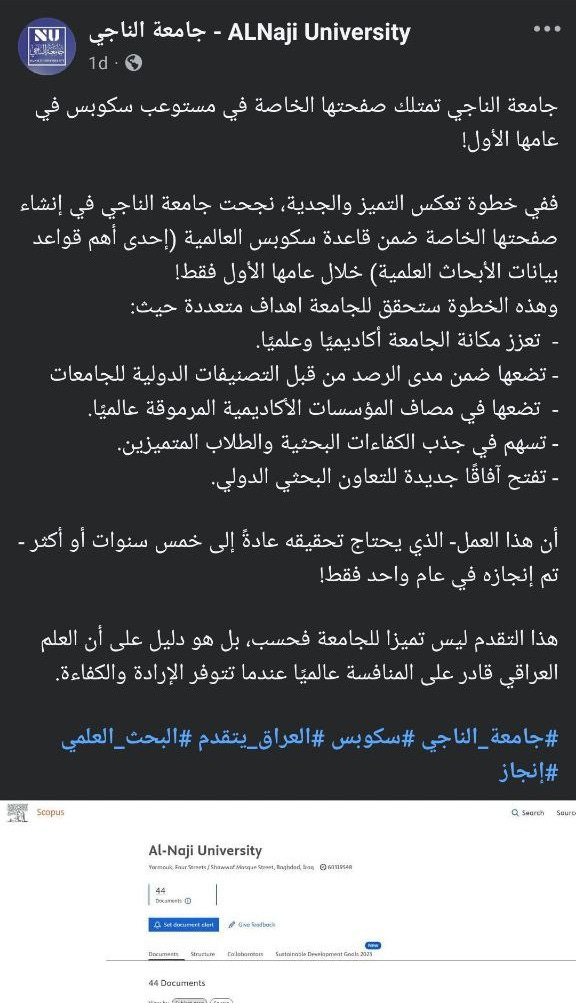
Recently, Al-Naji University in Iraq proudly published a Facebook post about some major academic milestones: “Al-Naji University succeeded in having their own Scopus profile in their first year!”, “This work that takes normally 4-5 years has been done in a single year!” and “This accomplishment is a proof that the Iraqi author can compete worldwide when good management and efficiency exists”. See Fig 1
At first glance it felt like an accomplishment to celebrate, but something didn’t wasn’t right. As the image attached by the University had the number of documents, but the number of authors was redacted as seen in Fig 2.
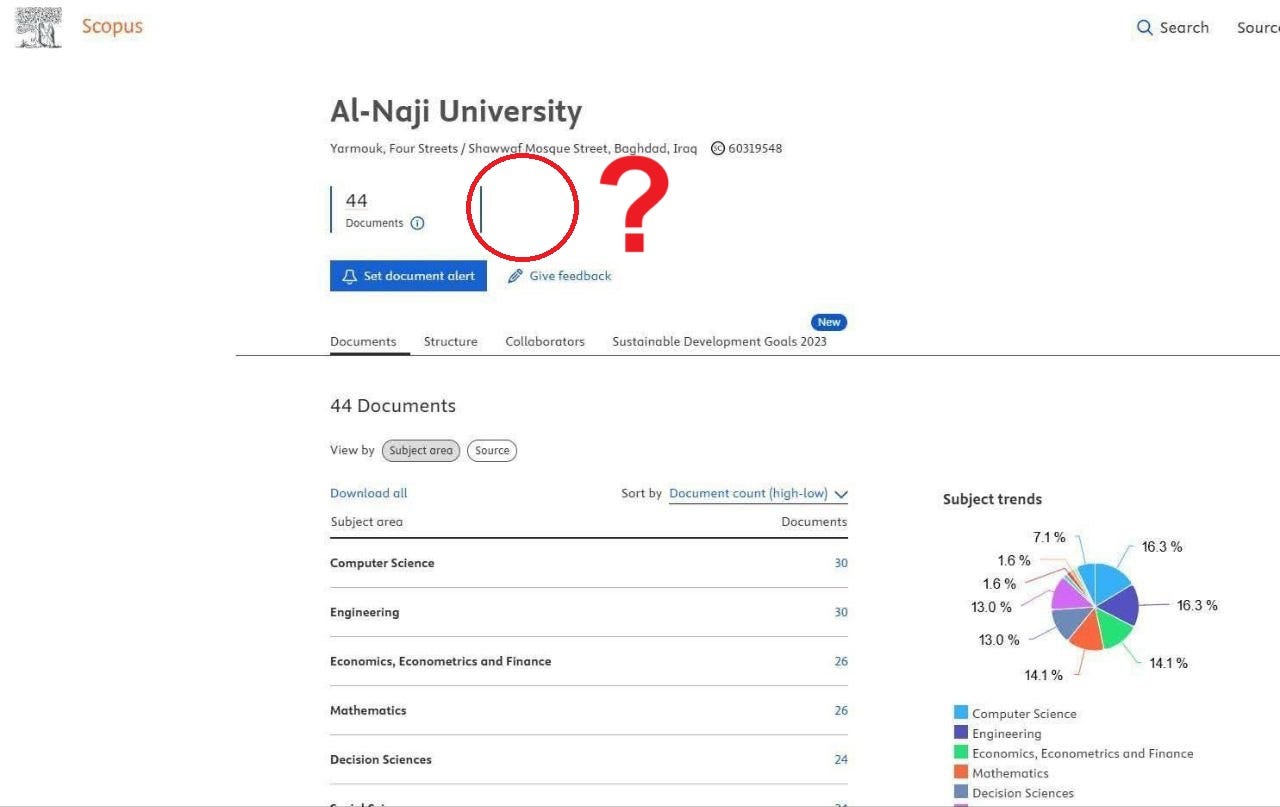
My first question was: “why would you want to conceal that?”, so I looked into their Scopus profile and it turns out there are only 6 authors involved with their affiliation. This raised an immediate red flag! A single year according to their claim with 45 documents? That’s an average of 7-8 papers a year for each author!
So, I decided to look into all the 45 documents, one by one. And lo and behold, 34 documents out of the 45 are authored/co-authored by two specific authors: Mohammed M.N. and Abdullah, Oday I.
Looking into the profile of these two authors, they both are hyperprolific authors publishing ~40-50 papers a year over the past 3 years. And each with over ~230 Scopus indexed papers.
These two authors will be mentioned again later, as they are involved in a large paper mill that will be discussed in detail.
Going back to Al-Naji University one study was mentioned twice “Substrate selection and characterization in infrared detector design for sorting systems” because the first one had a mistake in the author’s name and the journal published a correction. So, the total will be counted as 44 total papers.
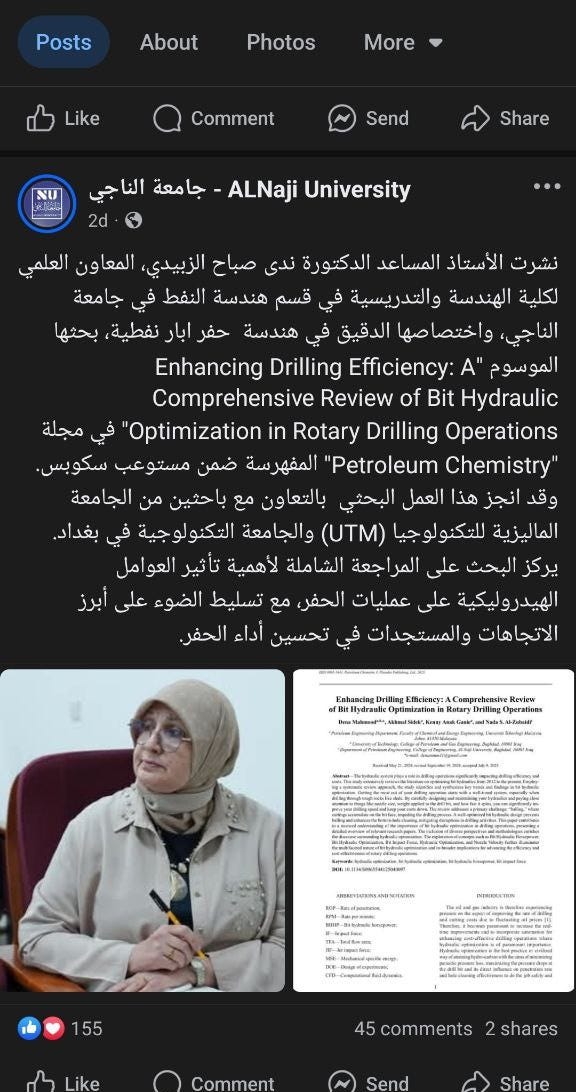
In addition, two more posts by the same university were found bragging about publishing Scopus indexed papers by two of their authors. The first one in Fig 3, a post about the published study titled “Enhancing Drilling Efficiency: A Comprehensive Review of Bit Hydraulic
Optimization in Rotary Drilling Operations” which was done in cooperation with UTM.
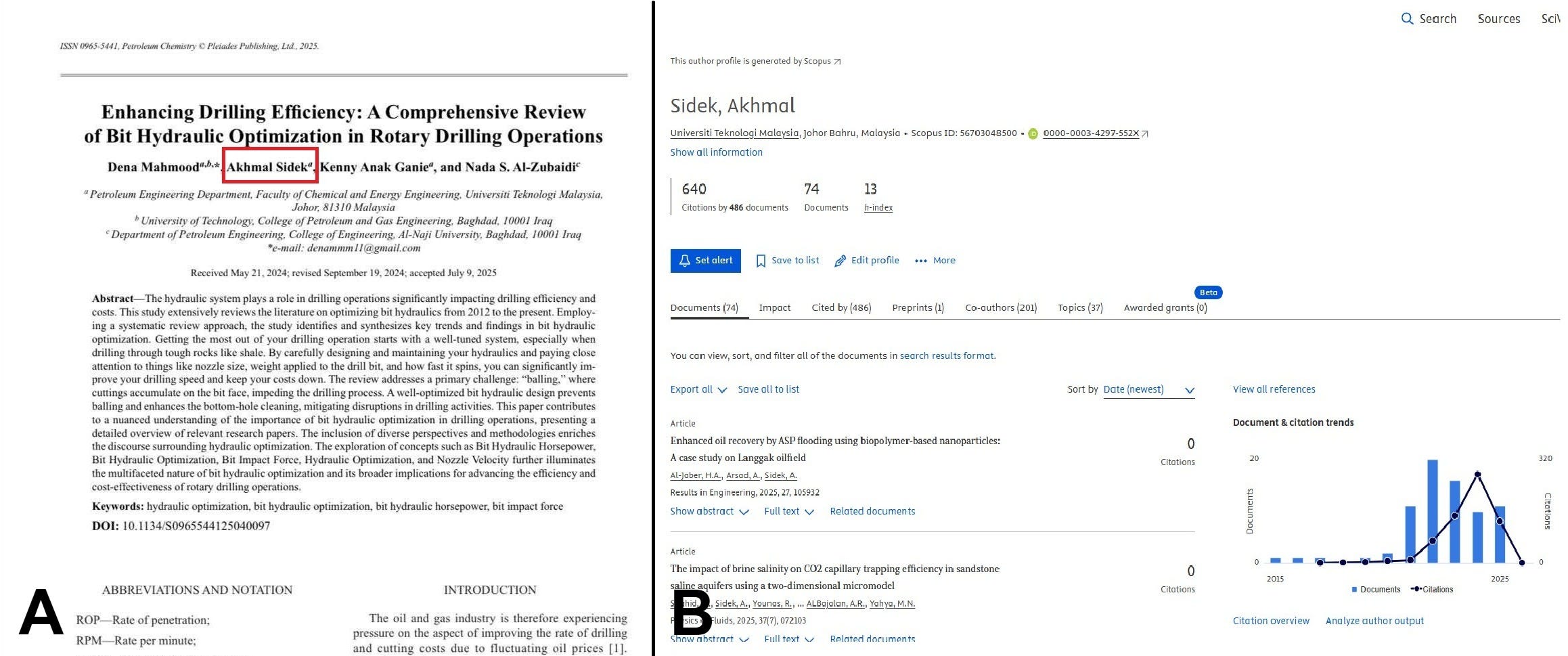
What was particularly interesting is one of the co-authors called Sidek, Akhmal who had 74 total published papers with an average of ~13 paper/year over the past 5 years as seen in Fig 4. That’s another red flag! Summing the total of fraudulent papers by Al-Naji university to 35/44.
Another post was published by Al-Naji University on the 27th of December, 2024, also bragging about a study published in Scopus indexed journal as seen in Fig 5.
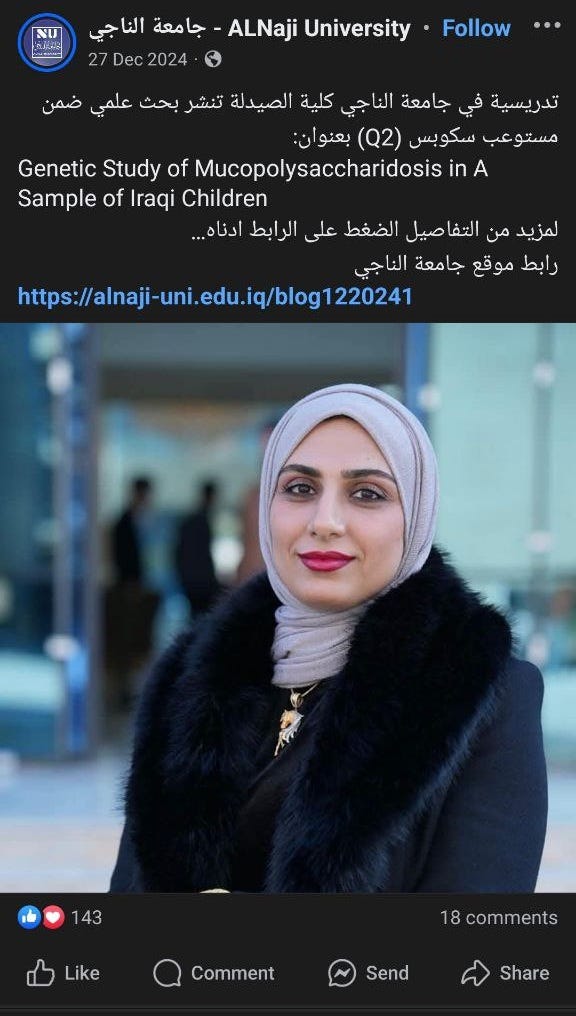
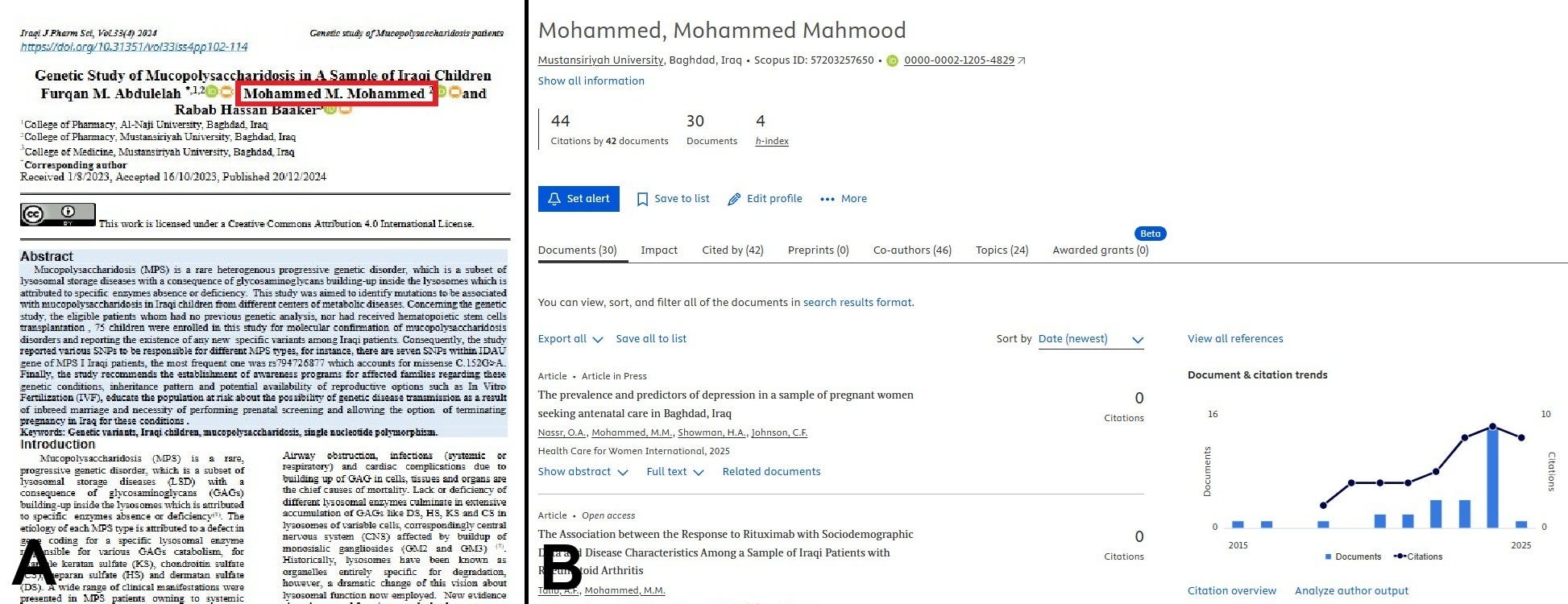
Though one of the co-authors called Mohammed, Mohammed M. has published 14 Scopus indexed papers in 2024 alone as seen in Fig 6. Which is a red flag. Bringing the total of possibly fraudulent papers of Al-Naji University to 36/44.
Now these are the only posts published by the Facebook page of Al-Naji University about their Scopus indexed papers, so I went to the Scopus profile and inspected each individual paper alone to verify their authenticity. And five more papers as seen in Fig 7 were found to have at least one hyperprolific authors with a range of ~120-180 papers.
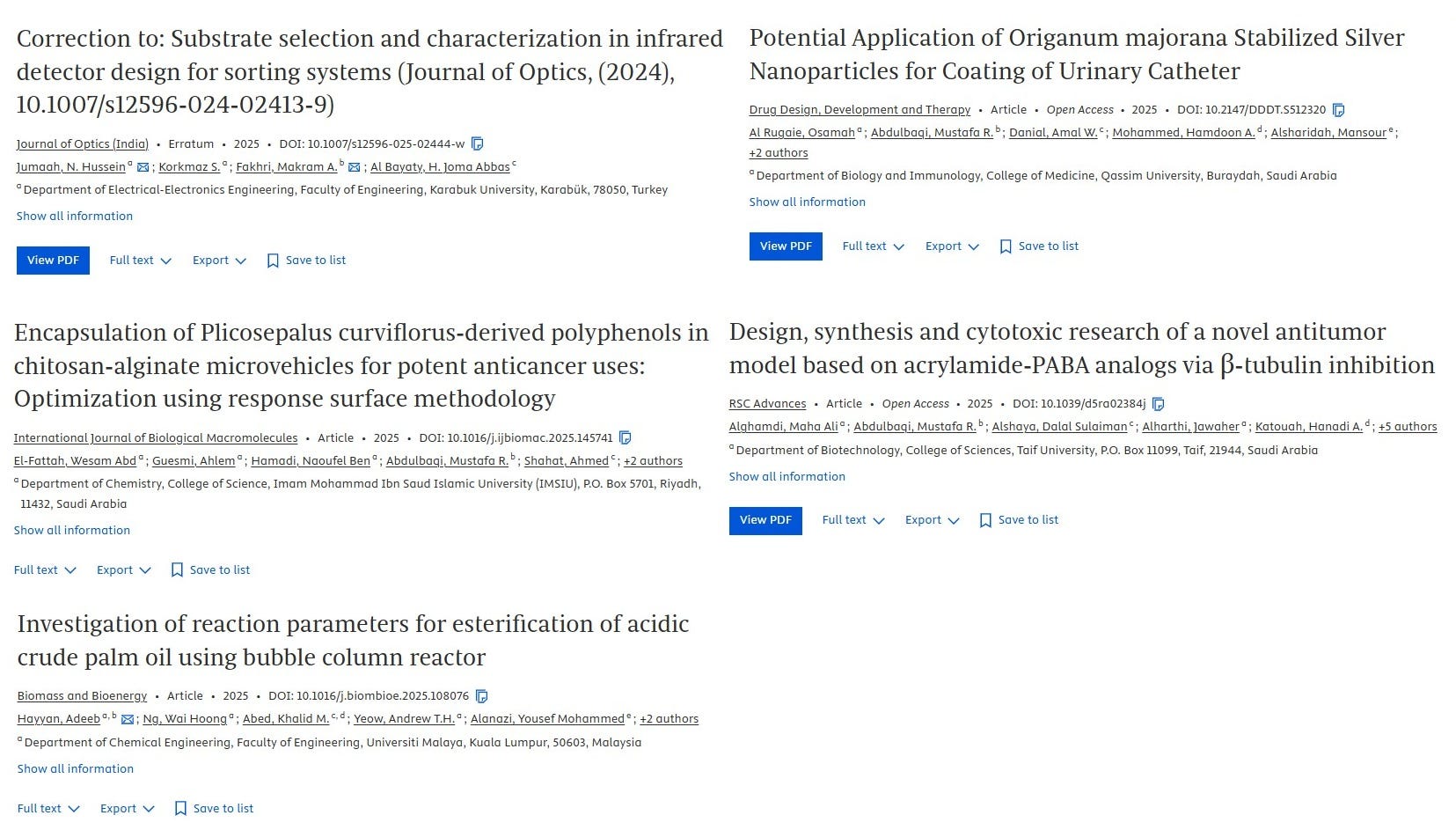
Which bring the total of fraudulent papers to 41/44 papers!
There are multiple paper mills involved with publishing with this specific university, so we tried to focus on and dissect one of these mills fully. Specifically, the one involved with Mohammed M.N. and Abdullah, Oday I.
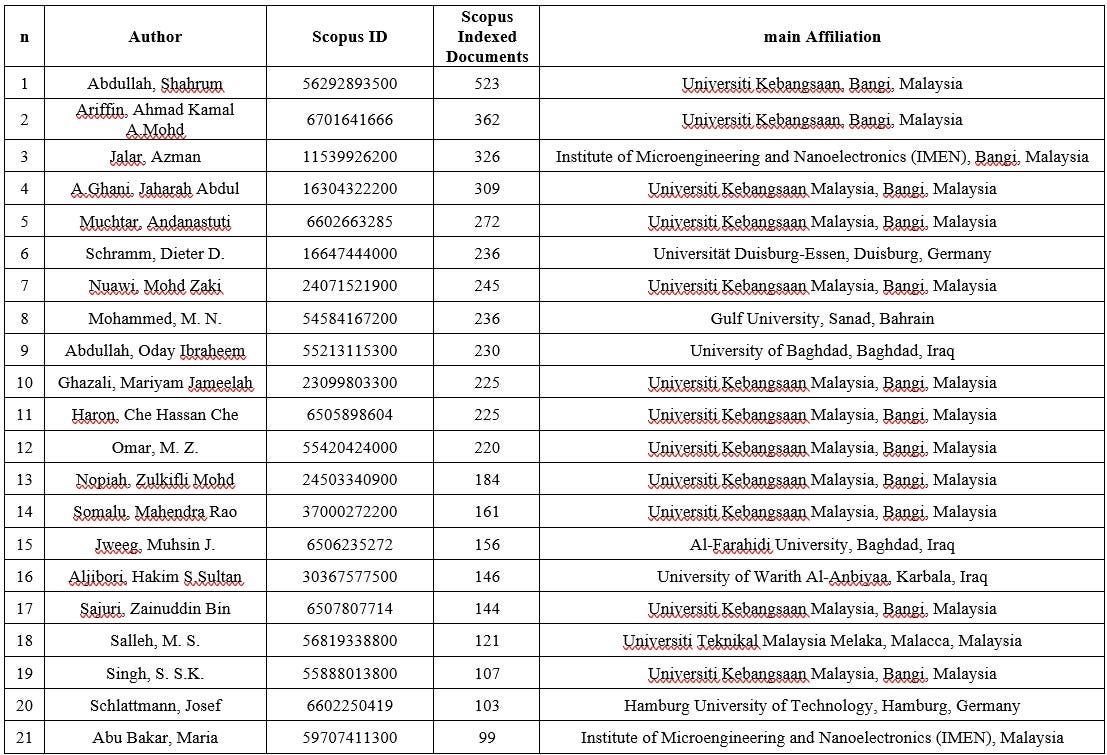
A total of 21 hyperprolific authors were identified, 15 were Malaysian, three were Iraqi, two were German, and one was from Bahrain as presented in Table 1. All documents for all authors were exported into CSV files on July 31, 2025. The total number of studies across all authors was 4,630, which were then merged into a single master sheet. After removing duplicates, 3,198 unique studies by these hyperprolific authors remained.
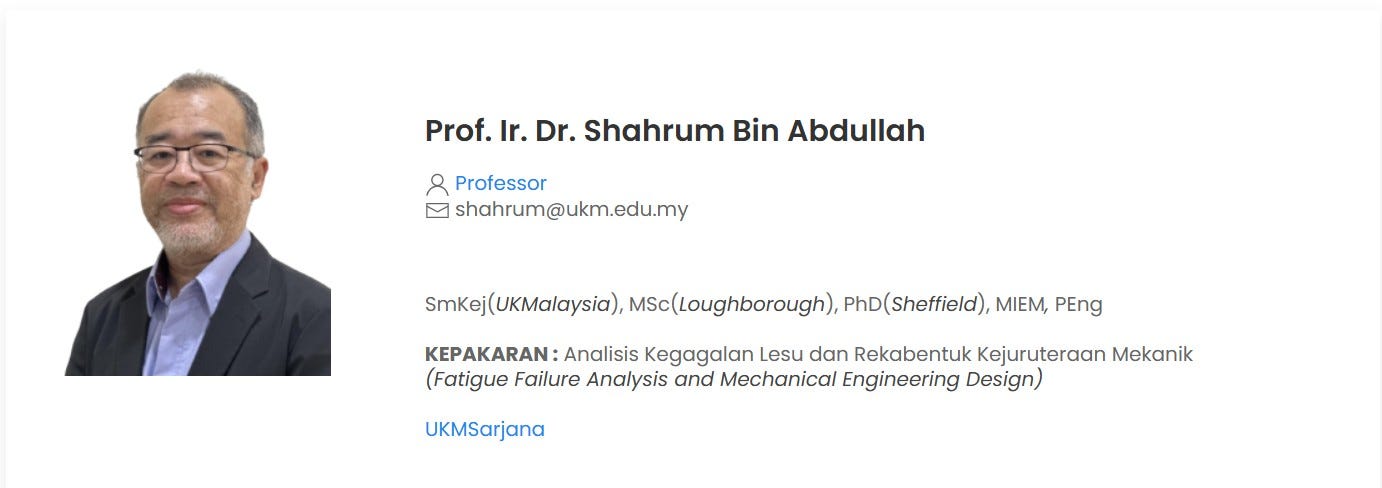
with most hyperprolific authors. This initially led me to believe it was a fake identity; However, after checking the staff directory of UKM, I eventually found him listed under the staff of Department of Mechanical & Manufacturing Engineering as seen in Fig 8.
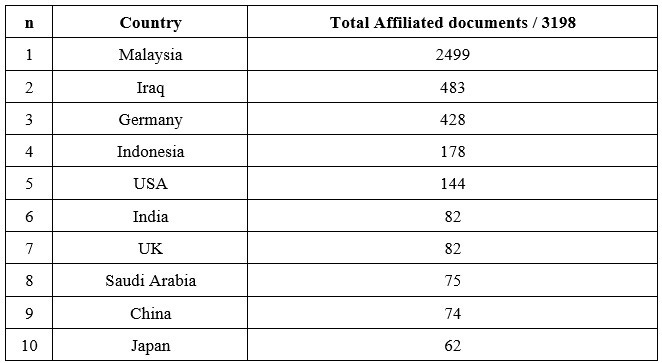
Malaysia, Iraq, and Germany took the top three spots for this paper mill, although several other countries were also involved. Table 2 lists the top 10 countries associated with this paper mill, along with the number of documents affiliated with each.
The university with the highest number of affiliations in this particular paper mill was Universiti Kebangsaan Malaysia (UKM), with 2,151 affiliations.
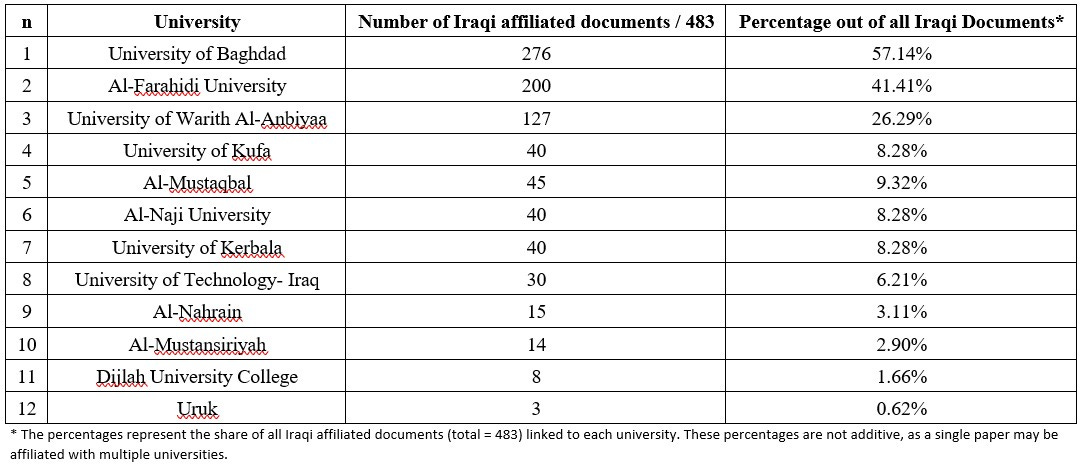
However, the focus of the investigation was on the Iraqi universities involved in the paper mill. University of Baghdad ranked first with 276 documents, followed by Al-Farahidi University and Warith Al-Anbiyaa University, as shown in Table 3.
The investigation into Al-Naji University's Scopus profile and its associated publications reveals a troubling pattern of academic misconduct, with 47 out of 51 papers linked to hyperprolific authors and suspected paper mill activities. The involvement of Mohammed M.N., Abdullah, Oday I., and other hyperprolific authors, alongside the dominance of institutions like Universiti Kebangsaan Malaysia and several Iraqi universities, points to a systemic issue within academic publishing. This case underscores the urgent need for enhanced scrutiny of publication practices, stronger peer review processes, and institutional accountability to safeguard the integrity of scientific research. The scale of this paper mill, spanning multiple countries and thousands of publications, demands immediate action from academic communities and publishers to address these fraudulent practices and restore trust in scholarly work.
Ethical Statement
All data collected are from publicly available sources (Scopus, university websites, social media). No private communication or non-public data has been used.
References
https://www.scopus.com/
https://www.ukm.my/jkmp/staff-department/academic-staff